
Machines and Tools are Used in Metal Sheet Fabrication
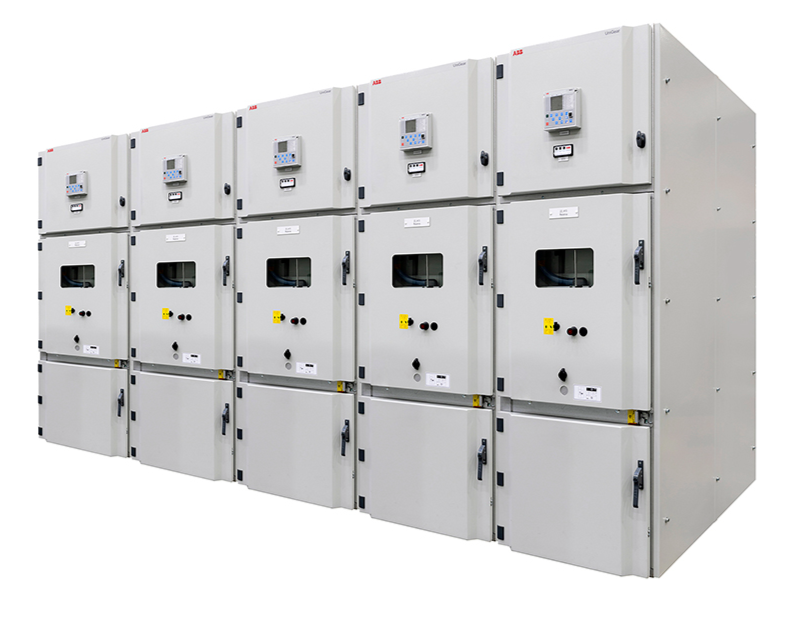
In modern industries, it is nearly impossible to carry out tones of metal cutting, moulding and assembling with the help of manual labour and hence it is necessary to bring in machines to help them carry out their task easily. Based on the kind of requirement, different kinds of machines are used to carry out the task.
What is Metal fabrication?
Sheet metal fabrication is a big industry in itself today. It involves cutting, welding, moulding and assembling metal sheets.
Metal fabrication is the process of creating metal parts or structures from raw metal materials. A number of fabrication techniques such as cutting, punching, bending and welding are used in the overall manufacturing process of metal products.
Sheet metal fabrication involves a broad range of processes that can often be confused. As a result, we’ve created a beginner’s guide to sheet metal fabrication, sometimes referred to as metalworking, and the techniques that are involved.
In the broadest sense, sheet metal fabrication is the creation of metal structures by using a variety of processes. Most often sheets of steel or other metal materials are processed and assembled to create a larger final product. In order to bind these smaller components, processes such as welding are used to provide a high-quality finish that create a range of products of varying shapes and sizes.
Machines and Tools are Used in Sheet Metal Fabrication
Let’s look into some of the widely used machine and tools that are essential for sheet fabrication:
1. Lathe Machine
A lathe is a machining tool that is used primarily for shaping metal or wood. It works by rotating the workpiece around a stationary cutting tool. The main use is to remove unwanted parts of the material, leaving behind a nicely shaped workpiece.
As it is a multi-purpose machine that is capable of cutting, welding, knurling, drilling, threading, facing and turning. Its main task is to rotate the workpiece to keep the process moving stage by stage.
2. Grinding Machine
A grinding machine, often shortened to grinder, is one of the power tools or machine tools used for grinding, it is a type of machining using an abrasive wheel as the cutting tool. Each grain of abrasive on the wheel’s surface cuts a small chip from the workpiece via shear deformation.
These are used to provide smoothness to metal sheets. An abrasive material is rotated at a high speed which removes the extra metal pieces from all the sides and hence provides a polished and smooth surface.
3. Drilling Machine
Upright drilling machine. Automatic drilling machine. Multiple Spindle drilling machine. Deep hole drilling machine.
The two major types of the drill are manual and electric drills. The common features they have today include multi-function power, selection of driver bits, and varied drilling power.
This is a widely used machine and is found in nearly every household. It is famous for its multi-purpose and easy usage. Other than doing repairing work, it is used for drilling into metal sheets, concrete and cement.
4. Broaching Machine
Broaching is a machining process that uses a toothed tool, called a broach, to remove material. There are two main types of broaching: linear and rotary. In linear broaching, which is the more common process, the broach is run linearly against a surface of the workpiece to produce the cut. Linear broaches are used in a broaching machine, which is also sometimes shortened to broach.
Broaching is used when precision machining is required, especially for odd shapes. Commonly machined surfaces include circular and non-circular holes, splines, keyways, and flat surfaces. Typical workpieces include small to medium-sized castings, forgings, screw machine parts, and stampings.
It is generally of two types – linear and rotator and it is used to remove the material from a workpiece with the help of broach. It supports the ingenious process of sheet production.
5. Shaper Machine
These machines uses a single-point cutting edge, moving linearly, to cut metal sheets in required sixes. They are easy to use and an important part of the sheet production process.
The shaper machine is a reciprocating type of machine basically used for producing the horizontal, vertical or flat surfaces. The shaper holds the single point cutting tool in ram and workpiece is fixed in the table.
The shaper machine can be very easy to operate. The tooling cost will be low. The lead time between the components is low. The workpiece and the tool can be held in the machine very easily.
Arious types of shaping machines are classified into four such as motion type (driving mechanism), ram travel, table design, and the type of cutting stroke: Types of shaper machine base on driving mechanism: Crank type e.g. quick return motion mechanism. Geared shaper type.
6. Saw Machines
A saw machine consists of a rotating blade that is used to cut metals into two pieces. They give a fine finish and are used in the primary stage of metal sheet fabrication. Hack saw, Circular saw and Band saw are some kinds of them that are widely used.
It is used to cut through material, very often wood, though sometimes metal or stone. The cut is made by placing the toothed edge against the material and moving it forcefully forth and less vigorously back or continuously forward.
In sawing, the individual teeth of the saw “track” through the work, each tooth depending on the cut made by the preceding tooth in the direction of feed.
7. Planer Machine
Planer machine is similar to shaper machines, the only difference being, the cutting tool is static and the workpiece is made to rotate in linear motion. It is usually larger than the shaper machines.
Planing is a common manufacturing process that involves pressing and rotating a workpiece against a fixed and stationary cutting tool. As the workpiece rotates, the cutting tool removes material from it. It's called “planing” because the cutting tool produces a plane on the surface of the workpiece.
8. Hobbing Machine
Hobbing is a machining process for gear cutting, cutting splines, and cutting sprockets on a hobbing machine, which is a special type of milling machine.
It uses to cut sprockets, gears, and splined parts using a specialist cutting tool known as a hob. The hob is a cylindrical cutting tool that features a series of helical rows of teeth. The hobbing machine features two spindles, one of which holds the work piece and the other the hob. Both spindles rotate at a set ratio while the hob is advanced into the workpiece to cut the teeth. Cutting toothed parts on a hobbing machine is a cheap yet accurate method of production of a wide range of products including worm gears, ratchets, involute gears, and helical gears.
9. Shearing Machine
They are special kinds of cutting machine that does not form chips or residual materials. These are especially used to cut metal sheets into fine pieces, blanking and piercing.
Shearing machines are multipurpose devices used in the cutting of alloys and other sheet metal. Some shearing machines use a scissor-like, angular shear action to cut metal into sheets or strips used for cutting sheet metal, plate, aluminum, and stainless steel to size.
Advantages of Metal Shearing Process. Shearing performs straight-line cuts without forming chips or burning or melting the material. This allows the process to work well with most softer metals, such as aluminum, brass, bronze, and mild (low carbon) steel.
10. Drill Press
It is a transformed version of the hand drill machine. They are more stable and easily workable. They help in drilling with more accuracy and precession.
The drill press is a stationary or benchtop power tool designed to bore precise holes in wood or metal. Learn all about it here. The drill press is a motorized tool designed to bore holes in wood, metal or plastic. Like a handheld drill, drill presses utilize various types of bits to make holes of different diameters.
There are two functions that the drill press can serve to help you tap a hole. The first thing is to keep the tap aligned with the hole that you're tapping. The other function is to keep light pressure on the tap so that it will cut cleanly as soon as you start turning it into the hole.
11. Hem Band Saw
It is a highly specialized cutting tool that is used to cut metals at an angle of 90, 60 and 45 degrees. It is more stable and you can get more control over it due to its adjustable pressure, blade tension and guide arm.
The worker can easily use it to observe the cutting while the machine moves due to its manual control feature, located at the front.Iron Worker This metal is widely used in metal and steel fabrication as well.
It is a vital machine and it can perform several tasks like shearing, notching, cambering, punching, bending flat plates, rods, bars and channels. This one tool can do half of your job and thus it is widely used.
12. Press Brake and Cambering Machine
The press brake is a machine for sheet metal fabrication, to realize the sheet metal bending function by bending mold. A press brake is a machine tool for bending sheet and plate material,most commonly sheet metal.
It forms predetermined bends by clamping the work piece between a matching punch and die.” A press brake is used to convert metal sheets into girders, channels, sections and angles. The process is simple, it bends the metal sheets by clamping them in between a punch and a die pair.
Precisely customize the camber of your steel beams without using heat. Mechanical cambering saves you time and increases your control, allowing you to camber thousands of steel beams to the exact specifications for any project.
13. Cambering Machine
A cambering machine will induce a permanent camber (or curve ) in your structural shape using mechanical force by means of hydraulic pressure. A cambering machine will induce a permanent camber (or curve ) in your structural shape using mechanical force by means of hydraulic pressure.
The obvious purpose of cambering is, to take straight steel beams and convert them to vertical arcs. Compared to cambering straight structural steel in the shop, producing and transporting structural steel with the necessary curvature simply isn't in the same realm of efficiency.
The obvious purpose of cambering is, to take straight steel beams and convert them to vertical arcs. Compared to cambering straight structural steel in the shop, producing and transporting structural steel with the necessary curvature simply isn't in the same realm of efficiency.
Precisely customize the camber of your steel beams without using heat. Mechanical cambering saves you time and increases your control, allowing you to camber thousands of steel beams to the exact specifications for any project.
14. Cold Saw
It is one of the most inexpensive cutting machines because it is a hand-held and portable saw machine.
The blades rotate at a high speed to provide a smooth finish. It works on an electric motor and a circular, toothed blade attached to it.
A cold saw is a circular saw designed to cut metal which uses a toothed blade to transfer the heat generated by cutting to the chips created by the saw blade, allowing both the blade and material being cut to remain cool. cold saw (also called a circular saw or cold cut saw) makes pristine cuts that don’t need deburring. It includes MANUAL COLD SAWS / SEMI-AUTOMATIC COLD SAWS /AUTOMATIC COLD SAWS.
15. Oxy- Gas Torches
Oxy-acetylene torches using the gas cutting method are one of the most popular tools for separating metals with low-alloy and low-carbon properties.
This tool uses various fuel gases and oxygen to cut and weld metal sheet component. it is also used in steel sheet fabrication. The fuel used is gasoline, propylene, acetylene, and hydrogen.
They are ideal for small scale metal fabrication. They are also used to address problems like straightening defects.
The process of cutting metal consists in bringing it to a temperature at which it burns on contact with the torch and volatizes in the form of metal oxide. Such an effect is possible only thanks to the use of appropriately constructed torches that can mix oxygen with specific proportions of combustible gas.
Oxy-acetylene welding torches are mainly categorized into two types: low pressure or injector type, and the equal pressure type.
16. Magnetic Drill
mag drill, is a drill that adheres to and cuts into metal - iron, stainless steel, Titanium, Inconel and other similar materials. A magnetic drill consists of a magnetic base, a drill motor, a drill body, and an arbor or chuck.
A magnetic drill device is used to drill holes in metal sheets and structures. it is useful in case of heavy metal drilling, which can’t be lifted easily. It is equipped with a permanent magnetic base (Mag base)
Metal sheet fabrication is a multi-stage process involving complex structural and operation.
Here is the basic metal fabrication and its tool and equipment during its manufacturing process.
Huizhou Glory Machinery Equipment Co., Ltd.
Huizhou Glory Machinery Equipment Co., Ltd. was founded in 1999, is located in the Huizhou area Zhongkai Chen Jiang Feng Yuan Lu Street No. 3 (Hui Sheng Industrial Park, building C, B), is a professional engaged in financial self-service cabinet, telecommunication service cabinet, environmental protection equipment, automation equipment, LED sheet metal frame, hood and production equipment facilities, machinery parts processing, fixture for the design, manufacture and sales of integrated production and processing enterprises. The organizational structure of the company consists of the precision sheet metal business, the rack, the machine parts department and the management department. Building area of 10000 square meters, fixed assets investment of over 15 million yuan, annual output value of more than 5000 yuan; there are more than 150 employees, including more than 30 engineering and technical personnel, more than 10 quality control personnel.
For more information on your sheet metal fabrication process, you can contact our international team today!


If you have any inquiry,please contact: